

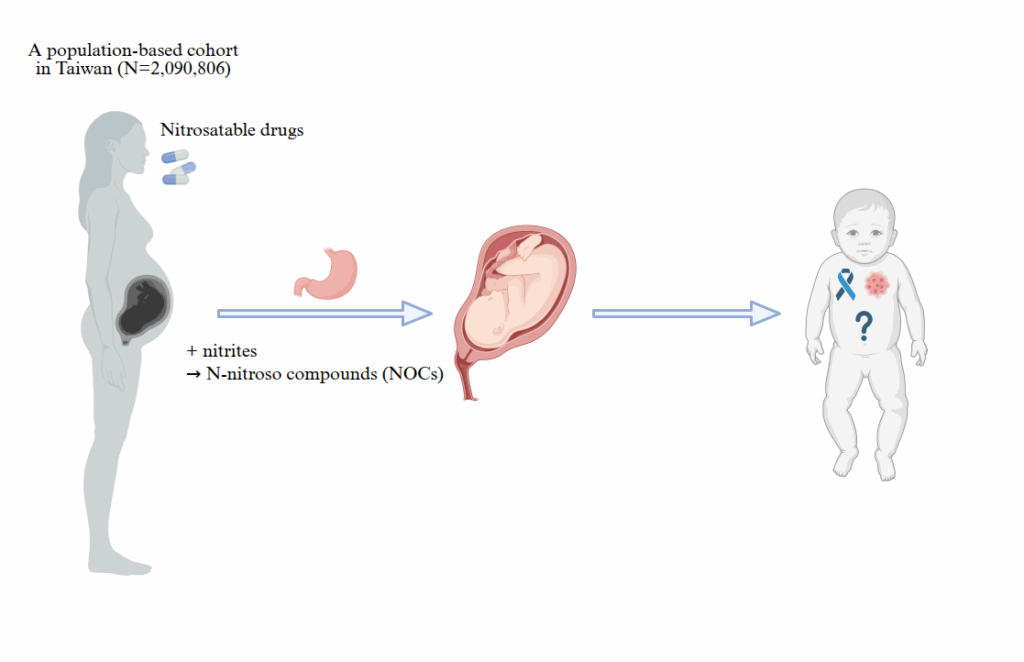
A recent nationwide study conducted by CLIC partners has suggested that maternal use of nitrosatable drugs during pregnancy may be associated with modestly elevated risks of several rare childhood cancers, including neuroblastoma, hepatoblastoma, and osteosarcoma. These medications—often containing specific anti-nausea agents, cough suppressants, and antibiotics—can form N-nitroso compounds, chemicals with known carcinogenic potential in animal studies.
Although the absolute risks remain small, the study found that children exposed in utero had measurable increases in cancer risk compared with children whose mothers did not use nitrosatable drugs. Confidence intervals were wide, yet the overall direction of the associations was consistent, lending weight to the signal. The risks also varied by drug class, with tertiary amines and amides showing the strongest links across cancer types.
The research included more than two million mother–child pairs in Taiwan. Nitrosatable drug use was common in this population, and often accompanied by acetaminophen use, making it difficult to fully separate correlated exposures. Nonetheless, the findings remained stable in sensitivity analyses and align with mechanistic evidence showing that N-nitroso compounds can cross the placenta, influence fetal liver function and neurodevelopment, and induce bone tumors in animal models.
The study’s large scale, use of national prescription and cancer registries, and prospective exposure measurement strengthen its conclusions. However, the authors emphasize that the results should be interpreted cautiously given the rarity of the cancers involved and remaining uncertainties around dose–response patterns, trimester-specific effects, and potential unmeasured confounders.
Despite these limitations, the analysis provides important new insights suggesting that prenatal exposure to nitrosatable drugs may contribute to the risk of certain childhood cancers. These findings highlight the importance of evaluating medication safety during pregnancy and of further investigating the biological pathways linking in-utero chemical exposures to long-term cancer risk.
Citation:
Article Title: Exposure to nitrosatable drugs during pregnancy and childhood cancer: A cohort study in Taiwan
Authors: Deng C, Hu YH, Sirirungreung A, Chock EY, Liew Z, Ritz B, Lee PC, Heck JE.
Published In: Int J Cancer. 2025 Nov 7:10.1002/ijc.70240. doi: 10.1002/ijc.70240.